Your Positive benedicts test color images are ready in this website. Positive benedicts test color are a topic that is being searched for and liked by netizens today. You can Get the Positive benedicts test color files here. Find and Download all royalty-free photos and vectors.
If you’re searching for positive benedicts test color pictures information related to the positive benedicts test color topic, you have pay a visit to the right site. Our website always provides you with suggestions for viewing the highest quality video and picture content, please kindly hunt and locate more informative video content and images that fit your interests.
Positive Benedicts Test Color. Amylase starch water water maltose water amylase boiled amylase amylase starch starch amylase starch Incubation condition 370 37C 37C 37C 37C 0C IKI test color change Result. Note any color change. The original color of the benedicts solution is turquoise or deep blue. Generally Benedicts test detects the presence of aldehydes alpha-hydroxy-ketones and hemiacetals including those that occur in certain ketoses.
 Food Test 2 Benedict S Test For Reducing Sugars Biology Notes For Igcse 2014 From biology-igcse.weebly.com
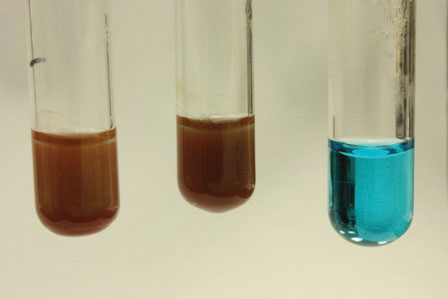
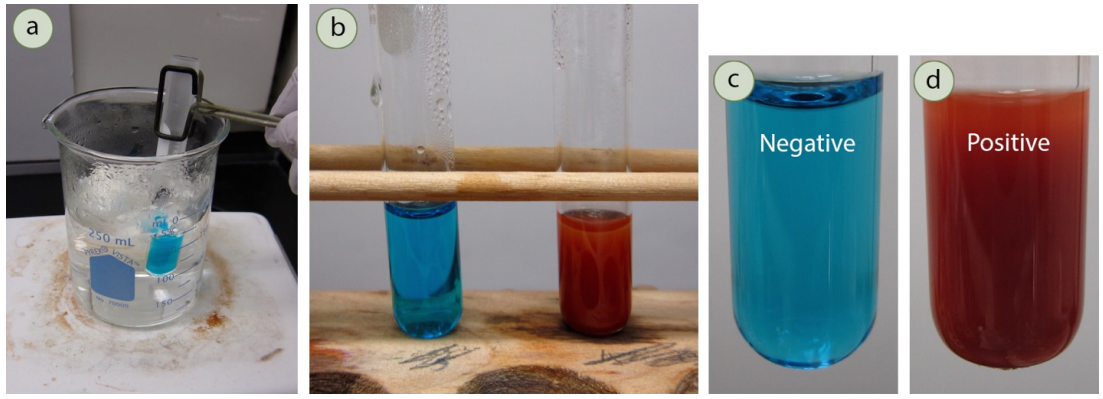
Fructose glucose and sucrose. Approximately 1 ml of sample urine. A positive Benedicts test is the result of the presence of reducing sugars. No color change Remains Blue. The test is based on Benedicts reagent also known as Benedicts solution which is a complex mixture of sodium citrate sodium carbonate and the pentahydrate of copperII sulfate. Carefully heat the test tubes by suspending in a hot water bath at about 40-50 degrees celsius for five minutes.
If a color change occurs that means some form of sugar glucose is present.
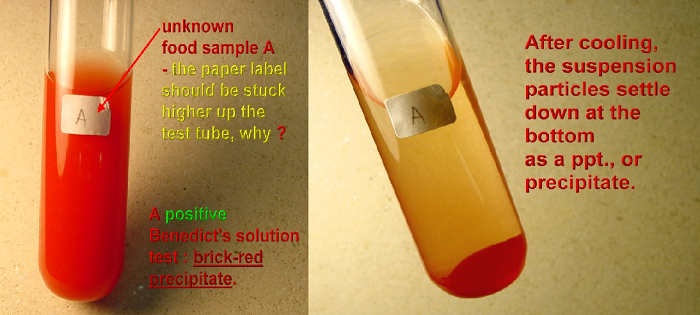
When exposed to reducing sugars the reactions undergone by Benedicts reagent result in the formation of a brick-red precipitate which indicates a positive Benedicts test. Generally Benedicts test detects the presence of aldehydes and alpha-hydroxy-ketones also by hemiacetal including those that occur in certain ketoses. Fructose glucose and sucrose. Result Interpretation of Benedicts Test. Benedicts test is carried out by heating the reducing sugar in the presence of Benedicts reagent. The solution containing sucrose remains blue.
 Source: onlinebiologynotes.com
Generally Benedicts test detects the presence of aldehydes alpha-hydroxy-ketones and hemiacetals including those that occur in certain ketoses. Results of benedicts test. Generally Benedicts test detects the presence of aldehydes alpha-hydroxy-ketones and hemiacetals including those that occur in certain ketoses. This solution is then heated in a boiling water bath for three minutes. The solution containing sucrose remains blue.
 Source: microbiologyinfo.com
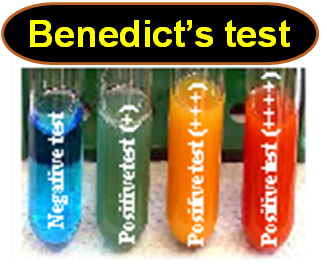
The color of the mixture changes accordingly resulting in precipitate indicating a positive result. On the other hand the test is negative if there is no changes in the. Benedicts solution is originally blue. 6 rows When it exposed to the reducing sugars the reactions undergone through Benedicts reagent form a. The presence of other reducing substances also gives a positive result.
 Source: onlinesciencenotes.com
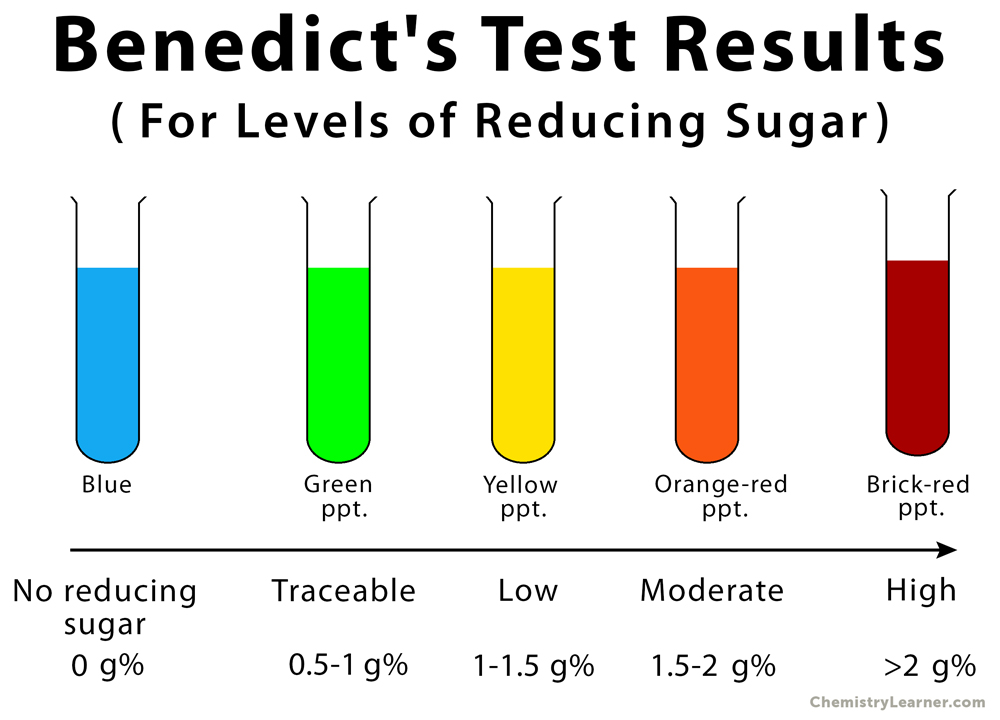
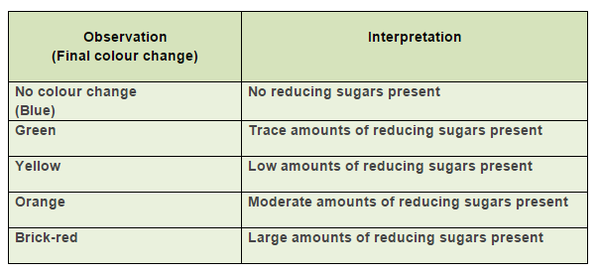
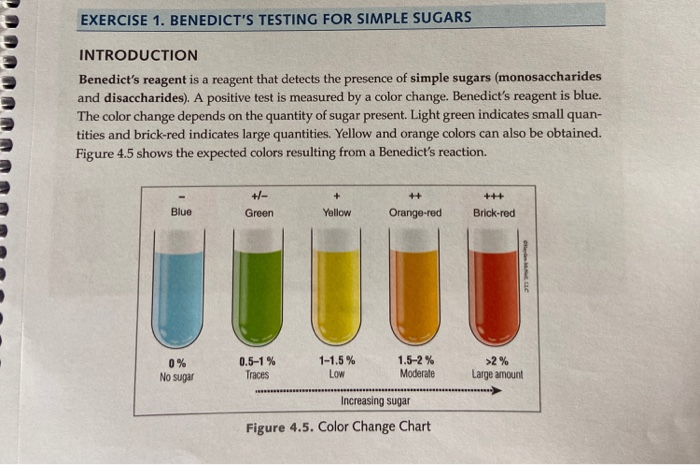
Or - Benedicts test color change. To perform the test a sample of the solution to be tested is combined to make Benedicts reagent. If it changes to orange then it means that 1 to 15 percent sugar is present. The presence of alkaline sodium carbonate transforms sugar to enediols a powerful reducing agent. No color change Remains Blue.
 Source: biology-igcse.weebly.com
Glucose Negative Benedicts Test. Results of benedicts test. A positive test with Benedicts reagent is shown by a color change from clear blue to brick-red with a precipitate. The color of the precipitates is considered as the result of the Benedicts test. Approximately 1 ml of sample urine.
 Source: dewwool.com
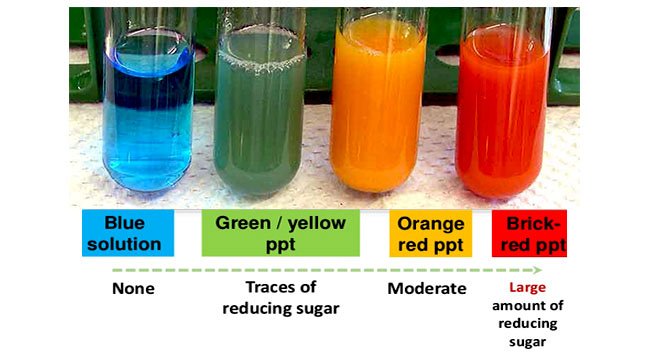
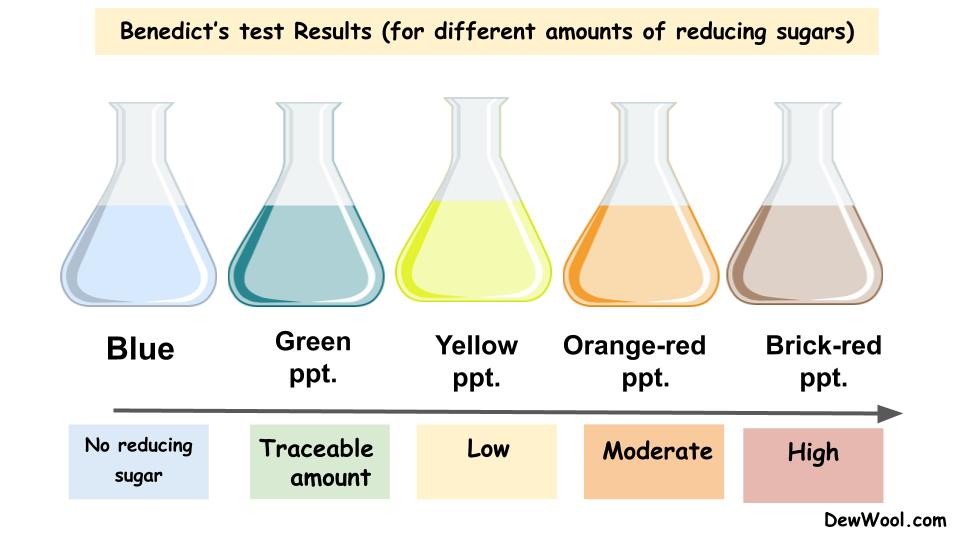
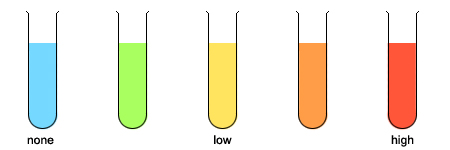
It demonstrates what a strong positive result should look like. The presence of other reducing substances also gives a positive result. Amylase starch water water maltose water amylase boiled amylase amylase starch starch amylase starch Incubation condition 370 37C 37C 37C 37C 0C IKI test color change Result. It will turn from blue to green to yellow to orange to pinkish red. Add 10 drops of Benedicts solution to each test tube.
 Source: slideshare.net
When exposed to reducing sugars the reactions undergone by Benedicts reagent result in the formation of a brick-red precipitate which indicates a positive Benedicts test. Positive Benedicts Test. The presence of other reducing substances also gives a positive result. If the color upon boiling is changed into green then there would be 01 to 05 percent sugar in solution. Or - Benedicts test color change.
 Source: microbenotes.com
The Benedicts test uses Benedicts reagent which turns from a transparent blue color to an opaque yellow orange or red color in the presence of reducing sugars. At the point when reducing sugars are blended with Benedicts reagent and warmed a decrease response causes Benedicts reagent to change its coloring. If the color of the benedicts solution remains the same it means that the solution does not contain reducing sugars. Or - Benedicts test color change. The intensity in color change is proportional.
 Source: chegg.com
Such tests that use this reagent are called the Benedicts tests. At the point when reducing sugars are blended with Benedicts reagent and warmed a decrease response causes Benedicts reagent to change its coloring. Amylase starch water water maltose water amylase boiled amylase amylase starch starch amylase starch Incubation condition 370 37C 37C 37C 37C 0C IKI test color change Result. If a color change occurs that means some form of sugar glucose is present. Glucose Negative Benedicts Test.
 Source: dewwool.com
If sugar is present solution will turn green yellow or brick-red depending on sugar concentration. When exposed to reducing sugars the reactions undergone by Benedicts reagent result in the formation of a brick-red precipitate which indicates a positive Benedicts test. A positive Benedicts test will cause the solution used in the test to form reddish precipitate according to Harper College. The solution is heated in a test tube for about two minutes and is cooled down. It demonstrates what a strong positive result should look like.
 Source: alevelbiology.co.uk
The original color of the benedicts solution is turquoise or deep blue. A positive Benedicts test will cause the solution used in the test to form reddish precipitate according to Harper College. 1A 2A ЗА 4A 5A 6A Additives 3 gtt ea Boil amylase 4 min then add starch. At the point when reducing sugars are blended with Benedicts reagent and warmed a decrease response causes Benedicts reagent to change its coloring. If sugar is present solution will turn green yellow or brick-red depending on sugar concentration.
 Source: biology-igcse.weebly.com
Or - Benedicts test color change. 5H 2 O sodium citrate Na 3 C 6 H 5 O 7 and sodium carbonate Na 2 CO 3 in distilled water 4. The original color of the benedicts solution is turquoise or deep blue. Results of benedicts test. The presence of other reducing substances also gives a positive result.
Source: biology-igcse.weebly.com
Amylase starch water water maltose water amylase boiled amylase amylase starch starch amylase starch Incubation condition 370 37C 37C 37C 37C 0C IKI test color change Result. A Benedicts test is positive if a reddish precipitate is formed within three minutes. Benedicts reagent is the solution used in Benedicts test to detect simple sugars such as glucose. The presence of alkaline sodium carbonate transforms sugar to enediols a powerful reducing agent. At the point when reducing sugars are blended with Benedicts reagent and warmed a decrease response causes Benedicts reagent to change its coloring.
 Source: byjus.com
To perform the test a sample of the solution to be tested is combined to make Benedicts reagent. A positive test with Benedicts reagent is shown by a color change from clear blue to a brick-red precipitate. Benedicts test was performed on three carbohydrates depicted from left to right. Approximately 1 ml of sample urine. This solution is then heated in a boiling water bath for three minutes.
 Source: quizlet.com
Amylase starch water water maltose water amylase boiled amylase amylase starch starch amylase starch Incubation condition 370 37C 37C 37C 37C 0C IKI test color change Result. A reducing sugar sample like blood or urine is mixed with benedicts solution5ml. The presence of other reducing substances also gives a positive result. A positive benedicts test forms a reddish precipitate within three minutes. If the color upon boiling is changed into green then there would be 01 to 05 percent sugar in solution.
 Source: saylordotorg.github.io
A positive test with Benedicts reagent is shown by a color change from clear blue to brick-red with a precipitate. The color of the precipitates is considered as the result of the Benedicts test. The presence of alkaline sodium carbonate transforms sugar to enediols a powerful reducing agent. If the color of the benedicts solution remains the same it means that the solution does not contain reducing sugars. Positive Benedicts Test.
 Source: chem.libretexts.org
A positive benedicts test forms a reddish precipitate within three minutes. Approximately 1 ml of sample urine. The color fluctuates from green to dim red block or corroded cocoa depending upon the measure of and sort of sugar. A positive test with Benedicts reagent is shown by a color change from clear blue to a brick-red precipitate. The solution is heated in a test tube for about two minutes and is cooled down.
 Source: quora.com
Benedicts solution is originally blue. A positive test with Benedicts reagent is shown by a color change from clear blue to brick-red with a precipitate. The presence of alkaline sodium carbonate transforms sugar to enediols a powerful reducing agent. The solution is heated in a test tube for about two minutes and is cooled down. If no sugars are present the Benedicts reagent remains the same color.
 Source: theskepticalchemist.com
Positive Benedicts Test. Carefully heat the test tubes by suspending in a hot water bath at about 40-50 degrees celsius for five minutes. When exposed to reducing sugars the reactions undergone by Benedicts reagent result in the formation of a brick-red precipitate which indicates a positive Benedicts test. A positive benedicts test forms a reddish precipitate within three minutes. In general blue to blue-green or yellow-green is negative yellowish to bright yellow is a moderate positive and bright orange is a very strong positive.
This site is an open community for users to submit their favorite wallpapers on the internet, all images or pictures in this website are for personal wallpaper use only, it is stricly prohibited to use this wallpaper for commercial purposes, if you are the author and find this image is shared without your permission, please kindly raise a DMCA report to Us.
If you find this site helpful, please support us by sharing this posts to your own social media accounts like Facebook, Instagram and so on or you can also save this blog page with the title positive benedicts test color by using Ctrl + D for devices a laptop with a Windows operating system or Command + D for laptops with an Apple operating system. If you use a smartphone, you can also use the drawer menu of the browser you are using. Whether it’s a Windows, Mac, iOS or Android operating system, you will still be able to bookmark this website.


